Cost of Towing a Car in Mountain Home, AR: A Local Rate Breakdown
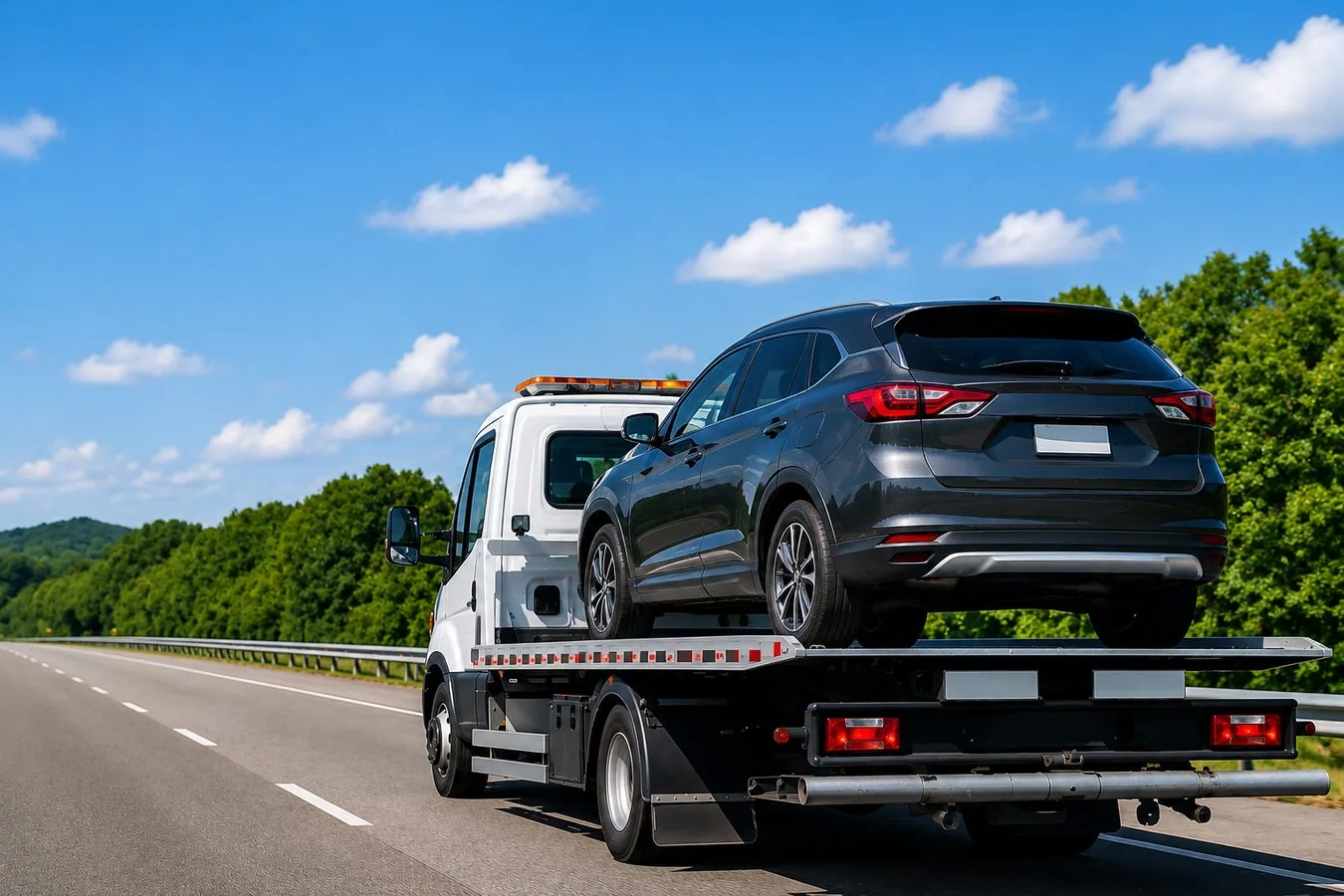
When your car quits on you at the corner of US-62 and AR-5, the first question that usually pops into your head is not "who do I call" — it's "what is this going to cost me." That is a fair question, and around Mountain Home you deserve a straight answer instead of a vague "it depends." So let's break down what towing a car actually costs in Baxter County, what drives the price up or down, and how to make sure the number you hear on the phone is the number you pay.
Mountain Home Towing runs licensed and insured trucks across Mountain Home, Gassville, Cotter, Flippin, Norfork, Lakeview, and Salesville, so the ranges below reflect real local jobs — not national averages that assume big-city traffic and big-city pricing.
What It Costs to Tow a Car in Mountain Home
Nearly every tow is built from two parts: a base hook-up fee to send a truck and load your vehicle, and a per-mile charge for the distance it is towed. In and around Mountain Home, here is what that typically looks like in 2026:
| Charge | Typical Mountain Home range |
|---|---|
| Base hook-up fee | $75 – $125 |
| Per loaded mile | $3 – $6 |
| Short local tow (under 10 mi) | $95 – $175 |
| Cross-county tow (Flippin, Norfork) | $150 – $275 |
| After-hours / holiday surcharge | $25 – $75 |
| Winch-out / recovery | $100 – $250+ |
For a quick, honest gut-check: a car that breaks down on 62 near downtown Mountain Home and gets flatbedded to a shop a few miles away usually falls in the $100 to $160 window. That is the most common ticket we write. The number climbs when the distance grows, when the vehicle is stuck somewhere tricky, or when the clock reads 2 a.m.
The Six Things That Move Your Tow Price
Two tows that both start in Mountain Home can end up hundreds of dollars apart. These are the factors that explain the gap:
- Distance. This is the single biggest driver. A tow to a shop in Mountain Home is cheap; a tow to a dealership in Mountain Home from a breakdown out past Norfork Lake adds real miles, and every loaded mile is billed.
- Type of tow. A flatbed ride costs a touch more than a wheel-lift because the whole car sits on the deck — the right call for all-wheel-drive vehicles, low cars, and anything with a locked transmission. Wheel-lift is quick and economical for a standard front- or rear-wheel-drive car going a short distance.
- Time of day. Most reputable companies, us included, keep a single fair rate 24/7, but late-night, weekend, and holiday calls can carry a modest surcharge simply because a driver is being pulled out at an odd hour.
- Recovery work. If your car slid off the shoulder on AR-5, dropped a wheel into a ditch near US-412, or got stuck on a wet boat-ramp slope by Bull Shoals Lake, that is a winch-out — a separate line item from the tow itself.
- Vehicle size and condition. A dually pickup, a lifted truck, or a fully loaded work van may need heavy-duty equipment, which carries higher rates than a compact car. A vehicle with all four wheels locked also takes extra effort to load.
- Extra stops or storage. If a car has to be stored overnight before the shop opens, a daily storage fee can apply. Ask about it up front so it is never a surprise.
Local Tow vs. AAA or Insurance Roadside
Plenty of Mountain Home drivers carry a AAA membership or a roadside add-on through their insurance, and those can be worth having. Just know the fine print. Most memberships cover a limited number of tow miles per year — often somewhere between 5 and 100 depending on your tier — and once you pass that mileage cap, you pay the overage out of pocket at the tow company's rate anyway.
Around here, the practical difference is speed and control. A national dispatch line has to find and route a local truck to you, which in a rural county can mean a longer wait. Calling a Mountain Home company directly means you talk to the person sending the truck, you get an honest ETA, and you know the price before the wheels turn. For a short local tow, paying cash-price out of pocket is often faster and only a little more than filing through a third party.
How to Avoid Surprise Fees
The best way to keep a tow affordable is to ask the right questions before the truck rolls. When you call, have these three details ready and you will get an accurate quote almost every time:
- Where you are and where you are going. A cross street or landmark plus the destination shop lets the dispatcher price the exact mileage instead of guessing high.
- What the car is doing. Won't start, won't shift, flat tire, or off the road — this tells us whether it is a simple load or a recovery, which changes the price.
- The vehicle type. Car, truck, or something oversized, and whether it is all-wheel drive. This decides flatbed versus wheel-lift.
A trustworthy, DOT compliant operator will give you a clear total or a tight range on the phone and honor it. If a company dodges the price question, that is your cue to call someone else. It is also smart to keep your car maintained — the U.S. government's vehicle safety resource at NHTSA.gov has simple upkeep checklists that help you avoid the breakdowns that lead to a tow bill in the first place.
Need a Tow in Mountain Home Right Now?
Fair, upfront pricing and fast 24/7 flatbed & wheel-lift service across Mountain Home, Gassville, Cotter & all of Baxter County (72653).
Call (615) 241-0232Frequently Asked Questions
How much does it cost to tow a car in Mountain Home, AR?
Most local tows in Mountain Home run roughly $75 to $125 for the hook-up plus about $3 to $6 per loaded mile. A typical short tow inside Mountain Home or nearby Gassville and Cotter usually lands between $95 and $175. Longer hauls toward Flippin, Norfork, or out of Baxter County cost more because of the added mileage.
What makes a tow more expensive?
Distance is the biggest factor, followed by the type of tow (flatbed costs a little more than wheel-lift), time of day (late-night and holiday calls can carry a surcharge), and any recovery work such as a winch-out from a ditch off US-62 or a boat-ramp slope near Bull Shoals Lake. Vehicle size matters too, since heavy-duty equipment carries higher rates.
Ever been surprised by a tow bill — high or low? What did the drive from your breakdown spot around the Twin Lakes actually run you?