Car Overheating in Mountain Home, AR? Do This Right Away
You are heading up US-62 toward Bull Shoals Lake, or maybe crawling through summer traffic on AR-5 in Mountain Home, and the temperature needle starts climbing toward the red. Then you catch it: a wisp of steam curling out from under the hood. An overheating engine is one of the most common breakdowns we respond to across Baxter County, especially in July and August, and what you do in the next five minutes decides whether you are looking at a $40 coolant top-off or a $3,000 engine rebuild.
This guide walks you through exactly what to do the moment your car starts overheating in Mountain Home, AR, what you should never do, why engines overheat in the first place, and when it is time to stop and call a 24/7 tow instead of pushing your luck. We are a local, licensed and insured towing company based right here in the Twin Lakes area, and we would much rather help you avoid a wrecked engine than winch a stalled car off the shoulder.
What to Do the Moment Your Car Overheats
When that gauge spikes, act calmly but quickly. The goal is to get heat away from the engine and stop driving before permanent damage sets in. Here is the order that matters:
- Turn off the air conditioning. The A/C compressor adds a heavy load to an already struggling engine. Shut it off the second you notice the gauge rising.
- Turn the heater on full blast. It feels miserable on a hot day, but the heater core pulls heat out of the engine and dumps it into the cabin. This buys you real time and can drop the temperature enough to reach a safe stopping point.
- Find a safe place to pull over. On US-412 or US-62, get well onto the shoulder, away from traffic. Turn on your hazard lights.
- Shut the engine off. Once you are safely stopped, kill the engine. Every minute it keeps running while overheated is more risk to the head gasket and cylinder head.
- Pop the hood only from the driver's seat, then wait. Release the latch but do not lift the hood yet. Let the engine cool for at least 20 to 30 minutes before going near it.
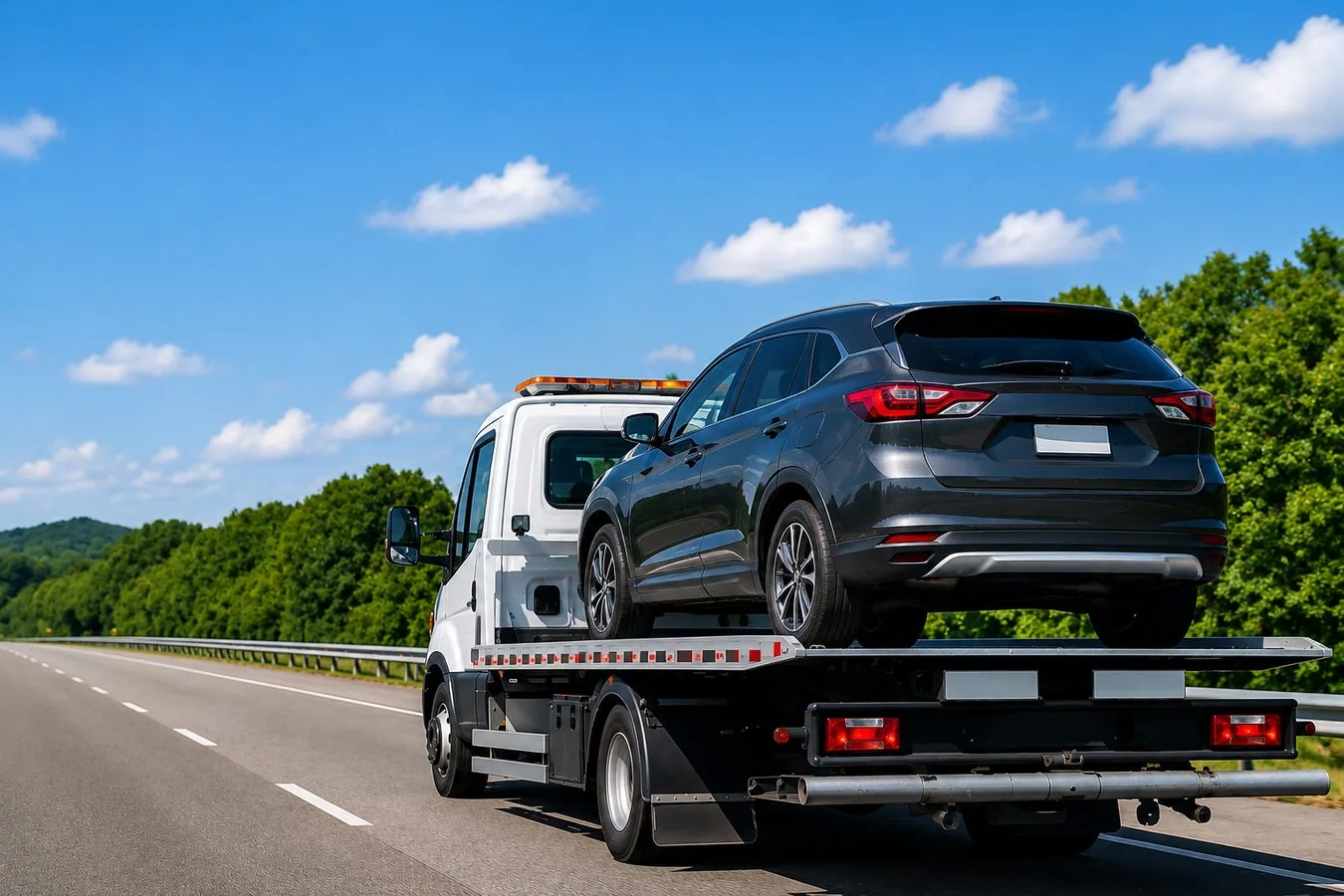
If you are stuck near Gassville, Cotter, Flippin, Norfork, or anywhere in our service area and the car will not cool down or restart safely, that is your cue to call for a flatbed. A flatbed tow keeps the drivetrain completely off the ground and gets your vehicle to a shop without another mile of heat damage.
What You Should Never Do When Your Engine Is Overheating
The mistakes people make in a panic are usually what turn a minor cooling issue into a catastrophic one. Avoid these:
- Never open the radiator cap on a hot engine. The cooling system is pressurized and can spray scalding coolant several feet, causing serious burns. Wait until the engine is completely cool.
- Never keep driving to "just get there." Driving an overheated engine even a short distance can warp the cylinder head or blow the head gasket. The NHTSA stresses pulling over safely at the first sign of a serious mechanical warning rather than pushing on.
- Never pour cold water into a hot engine. The sudden temperature shock can crack the engine block or cylinder head. If you add coolant or water, only do it after the engine has fully cooled.
- Never ignore a rising gauge because "it's done this before." A cooling system that repeatedly overheats is telling you something is wrong, and each episode does a little more damage.
Why Cars Overheat Around Mountain Home and the Twin Lakes
Knowing the cause helps you explain the problem to a mechanic and decide whether it is safe to move the car at all. The most common reasons we see in Baxter County include:
Low or leaking coolant. This is the number one culprit. A slow leak from a hose, the radiator, or the water pump gradually drops the coolant level until the system can no longer manage engine heat. The long grades on US-62 heading toward Bull Shoals Lake put extra load on the engine and expose a weak cooling system fast.
A failed thermostat. If the thermostat sticks closed, coolant cannot circulate to the radiator and the temperature climbs quickly even on a short drive around town.
A bad water pump. The water pump moves coolant through the engine. When it fails, circulation stops and heat builds within minutes.
A clogged radiator or failed cooling fan. Debris, corrosion, or a fan that stops spinning all reduce the system's ability to shed heat, which is why overheating so often shows up in stop-and-go summer traffic when there is little airflow.
Towing or hauling in the heat. Pulling a boat up from Norfork Lake or hauling a loaded trailer through Lakeview and Salesville in July puts serious strain on the engine, and a marginal cooling system will let go under that load.
Overheated and Stranded? We're 24/7.
Do not risk your engine limping home. Mountain Home Towing runs flatbed and wheel-lift trucks across Baxter County around the clock, DOT compliant and fully insured. Fast response on US-62, US-412, AR-5, and the back roads.
Call (615) 241-0232 NowWhen to Call a Tow Instead of Waiting It Out
Sometimes letting the engine cool and topping off the coolant gets you back on the road. Other times it is a clear tow situation. Call for a flatbed if any of these are true:
- The temperature gauge climbs back into the red within a few minutes of restarting.
- You see coolant pooling under the car, which points to a leak that will only get worse.
- There is steam, a burning smell, or the engine is running rough after overheating.
- You are far from a shop, on a rural stretch near Flippin or Norfork, and cannot safely diagnose the problem.
In any of these cases, a tow is the smart, cheaper move. Our operators can perform a quick winch-out if you have drifted off the shoulder into a ditch, load your vehicle on a flatbed, and deliver it straight to your mechanic in Mountain Home. We are licensed and insured, DOT compliant, and available 24/7 across ZIP 72653 and the surrounding Baxter County towns of Gassville, Cotter, Flippin, Norfork, Lakeview, and Salesville. If you want a sense of what a local tow runs before we roll, our guide on the cost of towing a car in Mountain Home breaks it down.
Frequently Asked Questions
Can I drive my car a short distance while it is overheating?
You should not. Even a mile or two of driving on an overheated engine can warp the cylinder head or blow the head gasket, turning a cheap fix into a multi-thousand-dollar repair. If the temperature gauge is in the red or you see steam, pull over safely, shut the engine off, and call for a flatbed tow. In Mountain Home we typically reach drivers on US-62, US-412, and AR-5 in 30 to 45 minutes.
How much does it cost to tow an overheated car in Mountain Home, AR?
A local tow within Mountain Home and Baxter County usually runs a flat hook-up fee plus a per-mile rate for longer distances. Because towing an overheated car protects the engine from far more expensive damage, it is almost always the cheaper choice. Call (615) 241-0232 for an exact quote before we roll.
Has your car ever overheated on one of the lake roads around Mountain Home? What did you do first?